How to get a business credit card with an EIN only

- What is an EIN-only business credit card?
- How to apply for a business credit card with an EIN
- Compare EIN-only business cards and alternatives at a glance
- EIN-only business credit cards and alternatives
- Can you get a business credit card without an SSN?
- Benefits of getting an EIN-only card
- Why some issuers don't approve applications with only an EIN
- Pros and cons of EIN-only business credit cards
- What you need to apply for an EIN-only business card
- Alternatives to EIN-only business cards
- How to build business credit with your EIN
- How to maximize your business card rewards
- Get a Ramp corporate card using your EIN
You can qualify for some business credit cards, mostly corporate cards, based on your business's employer identification number (EIN) and financials rather than your personal credit. An issuer may still ask an owner for identity details, including a Social Security number (SSN).
Requirements vary. Some issuers consider your business's cash balance or revenue, and some may also check personal credit or require a personal guarantee. Compare each card's terms before you apply.
What is an EIN-only business credit card?
An EIN-only business credit card is one you qualify for based on your business's employer identification number and financials instead of your personal credit. The issuer may still request personal information to verify your identity.
An EIN is the nine-digit number the IRS assigns to a business. Many cards that assess business finances are corporate charge cards, meaning the balance is due in full according to the card's payment terms. A revolving credit card, by contrast, may let you carry a balance and pay interest.
How to apply for a business credit card with an EIN
To apply with your EIN, gather your business details, compare cards, and complete the issuer's application and identity checks. If you’re forming an LLC or corporation, register it with your state before applying for an EIN.
1. Get your EIN
You can get an EIN for free directly from the IRS online in minutes. You don’t need to pay a third-party site to file for you, since the IRS doesn't charge for an EIN.
If you already have one, you can find your EIN in your CP 575 letter from the IRS, business tax returns, or banking documents. If you're the business owner, you can also retrieve it online through your IRS Business Tax Account or by requesting an Entity Transcript.
2. Set up your business entity and bank account
If needed, register an eligible business entity and open a business bank account in its name. Some issuers ask you to link the account when you apply.
3. Gather your business documents
Pull together the details issuers ask for so you can finish the application in one sitting:
- Legal name and structure: Your registered business name and entity type
- Registration date: The date you formed the business
- Revenue: Current and projected figures
- Bank statements: Recent statements from your business account
- Employee count: The number of people you employ
4. Compare EIN-only business credit cards
Look for cards that skip the personal guarantee and underwrite on your business finances. Then ask each issuer whether it reports to business credit bureaus and weigh rewards against how your team actually spends.
5. Submit your application and verify your identity
Complete the business sections, provide any requested bank information, and finish owner identity verification. Some issuers run a soft credit check.
Follow the issuer's instructions for any requested documents or bank-account connection.
Compare EIN-only business cards and alternatives at a glance
Card comparison

- Corporate card and spend management platform
- Cashback rewards on purchases
- Unlimited employee cards with custom spending limits
- Automated receipt matching
- Accounts payable software
- Must have $25,000 in a business bank account to qualify
- Balance is due in full according to the applicable payment terms
Annual Fee
$0
APR
N/A
 BILL Divvy Corporate Card
- Corporate card available to registered businesses with an EIN number and U.S. business bank account
- Requires an SSN, but only for a soft credit check, so there's no impact on your credit score
- Comes with expense management software
- Points-based rewards with bonus points in different categories
Annual Fee
$0
APR
N/A
 FairFigure Lift Card (formerly Capital Card)
- Revenue-based funding delivered on a debit card—not a credit or charge card
- No personal guarantee or personal credit check
- No annual fee
- Reports 2 monthly tradelines to business credit bureaus
- Requires 3 months in business and $2,500 in deposits to qualify
- Cashback on vendor purchases
Annual Fee
$0
Personal Guarantee
Not required
EIN-only business credit cards and alternatives
Some corporate cards assess a company's finances rather than relying on the owner's personal credit. FairFigure's debit-based funding product is an alternative, not a credit card.
Compare each provider's requirements, including identity verification and whether a personal guarantee is required:
Ramp Business Credit Card

- Higher credit limits: Ramp provides credit limits up to higher than traditional business credit cards by assessing factors like revenue and funds raised, rather than relying solely on your business credit score
- Flexible qualification options: Ramp partners with major commerce platforms such as Stripe, Shopify, and Amazon to determine credit limits for startups using sales data. With just 1 year of sales history on these platforms, your business can qualify and accelerate growth.
- Exclusive partner rewards: Ramp cardholders enjoy access to over $350K in rewards, including discounts, credits, and perks for services like UPS, AWS, QuickBooks, OpenAI, Notion, and more
- Simplified spend control: Customize and enforce expense policies with Ramp’s spend controls. Set limits by vendor, category, or transaction, and automatically flag out-of-policy or suspicious activity.
- Comprehensive financial tools: Ramp’s business credit card includes a suite of finance features such as expense management, financial reporting, accounting integrations, corporate travel booking, and accounts payable automation
- Eligibility: Only available to corporations, LLCs, or LPs; sole proprietors are ineligible
- Cash on hand: U.S. applicants must have $25,000 in a business bank account
- Balance transfers: Balance transfers are not supported
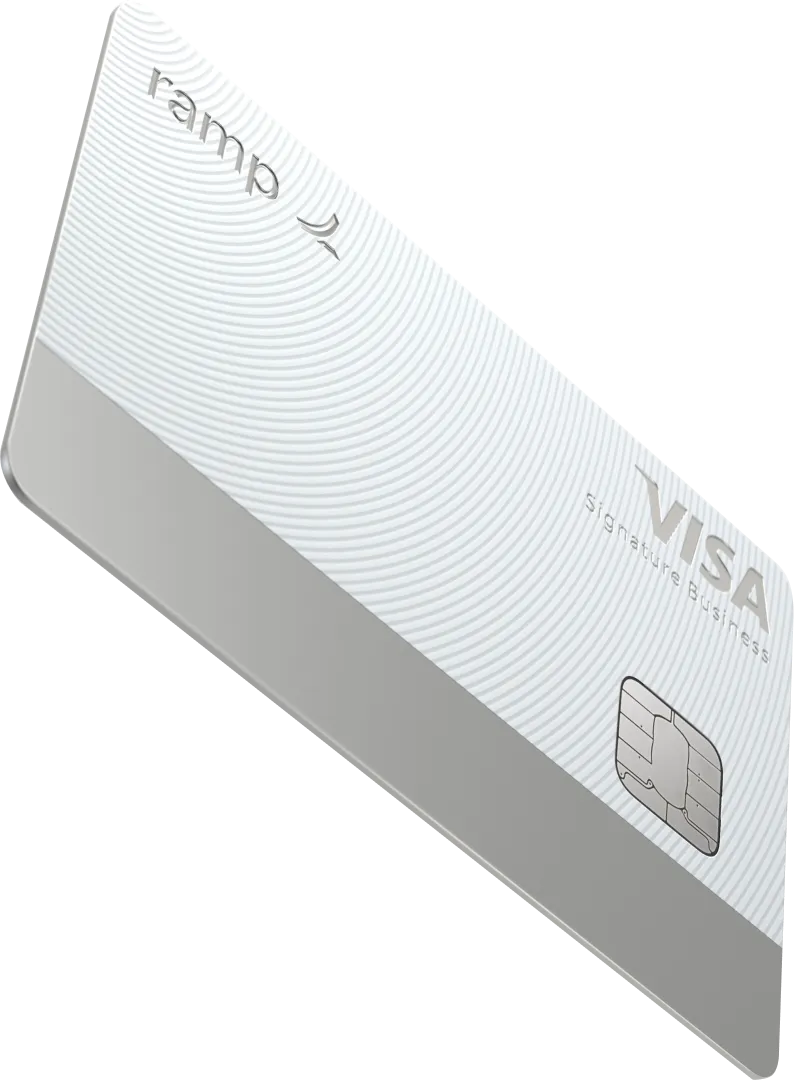
The Ramp Corporate Card provides cashback rewards on purchases and comes with no annual fee. It includes expense management tools to help you automate financial workflows, control spending, and improve reporting. Ramp doesn’t require a personal guarantee or a personal credit check.
Designed for modern businesses, the card emphasizes simplicity and efficiency with features like spend controls, detailed analytics, and smooth integration with accounting software. With a focus on optimizing expenses, Ramp helps you manage your finances effectively while earning consistent rewards.
BILL Divvy Corporate Card
- No personal guarantee: Approval does not require a personal guarantee
- Rewards program: Earn points on eligible purchases through a points-based rewards system
- Expense management tools: Features built-in tools for tracking expenses and managing budgets
- No annual fee: Access the card without paying an annual fee
- Eligibility: Requires a registered business, an EIN, and a U.S. business bank account
- Card type: Operates as a charge card, requiring full payment each billing cycle
- Redemption delay: Points can be redeemed after the initial 12-month period, once you've earned at least 5,000 points and meet other program requirements.
The BILL Divvy Corporate Card provides a points-based rewards program and offers no annual fee. It includes budgeting tools to help you manage spend limits by category and align employee expenses with company policies. The card integrates directly with BILL’s financial tools for streamlined payment processes.
Rewards rates vary by payment schedule. The points-based rewards program may require more effort to maximize value compared to simpler cashback cards, and the features are geared more toward companies actively using BILL's ecosystem.
FairFigure Lift Card (formerly Capital Card)

- No personal guarantee required
- Reports two monthly tradelines to business credit bureaus, helping you build business credit faster
- Approves based on business bank account activity, not personal credit
- Debit card with revenue-based funding; not a credit or charge card
- Funding requires selling future revenue at a discount
- Less established brand with fewer integrations than larger providers
FairFigure is a business credit-building product designed for businesses that want to establish or strengthen their credit profile. Unlike a traditional charge card, the Lift Card is a debit card that provides revenue-based funding. FairFigure purchases future business revenue at a discount and provides the funding on the card. It doesn’t require a personal guarantee or personal credit check, though it requests an SSN and home address for identity verification.
FairFigure says the card offers two monthly tradelines and reports payments to business credit bureaus. Its product page says businesses need at least three months in business and $2,500 in deposits to apply.
Can you get a business credit card without an SSN?
Sometimes. Some issuers let you apply without an SSN, while others request one to verify your identity or check personal credit. Even if you qualify based on your business finances, you may need to meet cash balance or revenue requirements. Ask each issuer which forms of identification it accepts.
Ramp's corporate card requires no personal guarantee and no personal credit check. Identity verification is a separate requirement.
Sole proprietors can get an EIN, but many corporate cards are limited to eligible registered business entities. Check each issuer's requirements before applying.
Discover Ramp's corporate card for modern finance
Benefits of getting an EIN-only card
A card assessed on business finances can help you separate business spending from personal spending. Whether you are personally liable for a balance depends on your agreement, including whether you provide a personal guarantee, not on the EIN alone.
Some cards report payment activity to business credit bureaus. If yours does, responsible use may help build business credit. You can also get a free D-U-N-S number and vendor accounts that report to the bureaus. Ask the issuer whether it reports to personal or business bureaus.
Why some issuers don't approve applications with only an EIN
Many issuers ask for both an EIN and an SSN. Some require a personal guarantee, which means an individual agrees to repay the debt if the business cannot. An issuer may also ask for personal information to verify an owner's identity.
Issuers that require a personal guarantee may consider personal credit when deciding whether to approve an application, set a credit limit, or determine an interest rate.
Some, but not all, business credit card issuers that require an SSN will report payments on the card to personal credit bureaus.
Pros and cons of EIN-only business credit cards
A card assessed on business finances can be useful if you're looking for a card without a personal credit check, but requirements and reporting vary.
| Factor | Potential benefit | Consideration |
|---|---|---|
| Financial separation | A business card keeps business spending in a separate account. | Check whether the agreement requires a personal guarantee or allows personal credit reporting. |
| Business credit | On-time payments may help build business credit if the issuer reports to business credit bureaus. | Not every issuer reports; confirm where it reports. |
| Credit limits | Some issuers consider business finances when setting a limit. | Eligibility and limits vary, and cards may have cash or revenue requirements. |
What you need to apply for an EIN-only business card
Issuers may ask for your business details, financial information, and the identity of an owner. Requirements vary by issuer.
- Business entity and EIN: Many EIN-only corporate card providers accept registered corporations and LLCs, so confirm the issuer accepts your entity type. Sole proprietors can get an EIN, but most EIN-only cards don't accept them.
- Business bank account with a healthy balance or revenue: Issuers underwrite on your cash and revenue, so link the account that holds your operating funds. Minimums vary by issuer, so check each card's current requirements.
- Owner identity details: Owners still verify their identity, even when the card doesn't use personal credit.
- Business documents: Have your company name, legal structure, revenue, bank statements, and employee count ready.
- Online presence: Some issuers may ask for your business website or other information about your operations.
Alternatives to EIN-only business cards
If you don't qualify for a corporate card, a secured card, fleet card, or prepaid card may be worth considering. They work differently from one another, so check whether the product offers credit and whether it reports to business credit bureaus.
Secured business credit cards
Secured business credit cards require a deposit as collateral. Depending on the issuer, you may also need to provide an SSN, undergo a personal credit check, or provide a personal guarantee. A secured card may be an option with a 500 credit score, but approval is not guaranteed.
Bank of America Business Advantage Unlimited Cash Rewards Secured Mastercard credit card
This secured credit card from Bank of America has no annual fee and requires a minimum $1,000 cash deposit. When you're approved, your cash deposit will act as your line of credit. The card offers 1.5% cashback rewards with no annual cap, making it a good option for funding business expenses while improving your credit score.
The First National Bank Business Edition Secured Mastercard credit card
The First National Bank Business Edition Secured Mastercard Credit Card requires a single deposit between $2,000 and $10,000 (in multiples of $100), which acts as its credit limit. The card has a $39 annual fee.
Valley Bank Visa secured business credit card
The Valley Bank Visa Secured Business Credit Card requires a security deposit of 110% of your desired credit limit, up to $25,000, which acts as your line of credit. The card offers unlimited 1% cashback on every purchase, plus a 0% introductory APR on purchases for the first 6 months.
There's no annual fee. Availability varies by state, so check with Valley Bank.
Fleet and prepaid cards
If your business spends heavily on fuel or operates a fleet, a dedicated fleet card may be a good fit.
AtoB Flex is a credit-based fleet card for fuel and other vehicle-related expenses. Qualifying businesses can get it without a personal guarantee, and businesses can set spending limits and restrictions for drivers. The card also offers fuel discounts at participating stations.
Prepaid business cards are another no-credit-check option, but they use a loaded balance rather than a credit line.
How to build business credit with your EIN
You can work toward building business credit by opening accounts that report to business credit bureaus and paying them on time. Follow these steps:
1. Get a free D-U-N-S number
A D-U-N-S number is Dun & Bradstreet's unique identifier for your business, and it anchors your business credit file with that bureau. You can get one for free from Dun & Bradstreet.
2. Open vendor tradelines that report
Net 30 vendor accounts let you buy supplies now and pay within 30 days, and some vendors report those payments to business credit bureaus. Before you open one, ask each vendor whether it reports and to which bureaus. Corporate cards that report to business bureaus count as tradelines too.
3. Pay on time and monitor your reports
On-time payments may help build business credit when the account reports to a business credit bureau, so consider autopay or reminders. Check your business credit reports regularly and dispute any errors you find. Timing depends on when each issuer or vendor reports to the bureaus.
How to maximize your business card rewards
Getting approved is just the first step. The real value comes from using your card strategically.
- Match your card to your spending patterns: If your business spends heavily on software or advertising, look for cards with multipliers in those categories.
- Put recurring expenses on your card: Monthly subscriptions, cloud services, and regular vendor payments add up fast. Routing these through your corporate card can help you earn rewards on spend that's already happening.
- Consolidate your business spend: Splitting purchases across multiple cards dilutes rewards and complicates expense tracking. Pick one primary card to earn faster and simplify bookkeeping.
- Stack discounts with cashback: Partner perks and cashback aren't mutually exclusive. If your card offers exclusive vendor discounts, combine those savings with the rewards you're earning on your purchases.
Get a Ramp corporate card using your EIN
Ramp's corporate business credit cards offer more flexibility than other types of cards, as well as a range of additional perks for managing your business finances. You can use Ramp at all different types of stores. Plus, Ramp helps you save more with its rewards and has credit limits higher than traditional banks.
You can block out-of-policy spend at the swipe with merchant, category, and amount controls built into every card. Approval times vary.
We also make it easy to start an employee card program by allowing you to issue unlimited virtual credit cards. You can place spending limits or restrictions on where your employees can use the cards, empowering your company to spend as necessary while controlling for unnecessary expenses.
Plus, Ramp's cards come packaged with a suite of expense management tools that allow you to track your finances in real time. Try an interactive demo to see how Ramp's corporate card works.
How WizeHire sped up month-end close by 58% with Ramp
WizeHire, a growing HR-tech firm, needed a better way to manage spend as they scaled. Using Ramp's corporate card, they unlocked faster and more secure finance operations. Before switching, WizeHire funneled all spend through one shared Amex, resulting in limited control, significant receipt chasing, and net 12 closes.
Ramp enabled WizeHire to issue cards to individuals and set spend limits on each card. That switch drove a dramatic impact: WizeHire went from a 12-day to a 5-day close, shaving 58% off its month-end timeline. Its audit paperwork was also tied directly to its enterprise resource planning (ERP) system.
"Ramp is one of those secret advantages that maybe we shouldn't be talking so much about," said CEO Sid Upadhyay. "But we are."
Ramp's automated spend controls delivered:
- Sharpened expense reporting: Employees can spend within pre-set budgets.
- Full audit readiness: Audit documentation was already tied to the ERP.
- Department-level granularity: WizeHire sees ad spend by program and P&L the next day instead of waiting for month-end.
WizeHire's transition to Ramp checked several boxes: individual cards for every employee who needs one and spend limits on each card. The result is a finance stack that supports autonomy, accelerates decisions, and frees up cash flow to reinvest in growth.
The cashback percentages, limits, fees, and other figures mentioned in this article are for illustrative purposes only. They do not represent guaranteed or expected rates. Actual terms, credit limits, rewards, and approval criteria vary by card issuer and may change at any time. Readers should verify current details directly with each issuer before applying.

FAQs
A secured business card may be an option, but approval is not guaranteed. Some corporate cards assess business finances rather than personal credit. Check each issuer's eligibility requirements.
Open accounts that report to business credit bureaus, such as eligible cards or net 30 vendor accounts, and pay them on time. Ask each provider whether and where it reports.
Some startups may qualify. Requirements vary by issuer and can include a minimum business cash balance or revenue. If a corporate card isn't a fit, consider secured cards or vendor accounts.
Yes. Some corporate cards, including Ramp and BILL Divvy, don't require a personal guarantee. Check the card agreement to understand who is responsible for repayment.
Yes. Many corporate card providers accept eligible LLCs and assess business finances. The issuer may still request personal details for identity verification.


“Our cupcakes are handmade. Our back office doesn’t need to be. Ramp gives us the automation to run a big business without losing the personal touch that made us who we are.”
Amanda Tedeschi
Controller, Baked by Melissa

“I want to trust the people at our sites to buy what they need, when they need it. With everything in Ramp, they have one place to go and one set of rules to follow. And I can see how all of their spending ties back to the contracts that fund their work.”
Marina Peterson
CFO, Wu Yee Children’s Services

“Finance isn’t just there to keep a record of the past. Are we negotiating with a retail partner? We have a seat at that table. Looking at a brand partnership? We have a seat at that table too. That’s really the big unlock: finance can be a strategic partner across the business, while Ramp keeps day-to-day work from pulling us away.”
Rachel Prescott
CFO, Caraway

“I assumed I would have to choose between speed and control. What I found is that you can have both. A well-designed system takes friction out, for the finance function and for everyone else.”
Justin Webster
CFO, Denver Broncos

“A well-run district should not have to choose between getting work done at the school site and keeping control of the dollars behind it. We're not hiring more people to do more jobs, so we have to be smarter about the process. With Ramp, the purchase, the receipt, and the record stay together from the start. ”
Nick Brizeno
Director of Purchasing, San Marcos Unified School District

“In senior living, scale only works if the communities still feel personal. We needed the back office to carry more of the complexity, not the people serving residents. Ramp helped us build that infrastructure, so the experience in the community could stay human.”
Ryan Cole
CFO, Agemark Senior Living

“AI is moving faster than the finance context around it. Prices change, models change, and the value is not always obvious from an invoice. We needed enough detail to know which bets deserved more investment — and which ones did not.”
Greg Cooley
Controller, AngelList

“Invoices, cards, tokens. The categories change but the principle doesn't: know where the money is going, remove the work around it, and make sure the spend is worth it.”
Maciej Mylik. Finance
ElevenLabs
